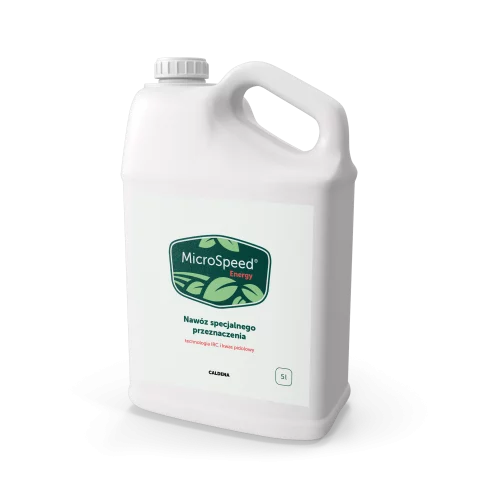

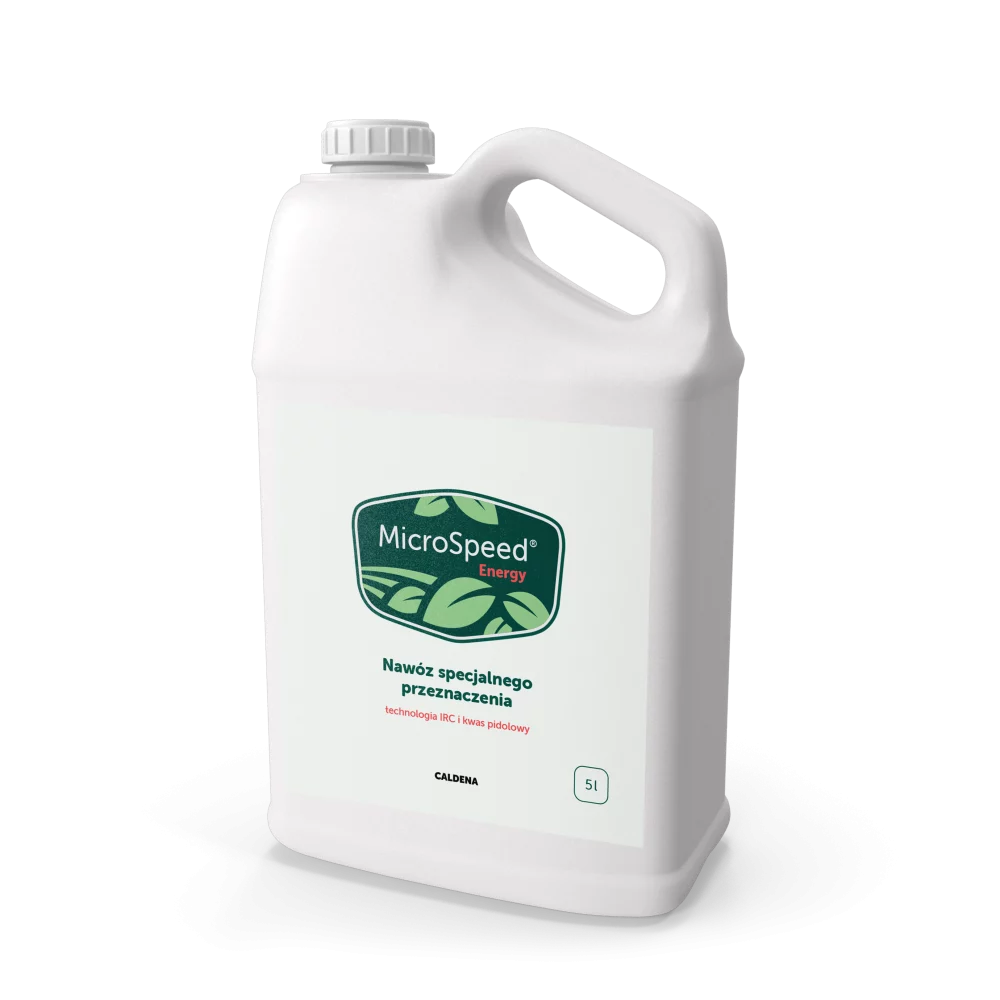

1 l, 5 l
Foliar Fertilisers with Stimulating Effects
1 l, 5 l
2 g/l IRC (1-(2-methoxyethyl)-3-(1,2,3-thiadiazol-5-yl) urea)
320 g/l pidolic acid
33.3% organic matter
35% dry matter
3.4% total nitrogen (N)
3.4% urea nitrogen (N-NH2)
0.4% phosphorus (P) soluble in mineral acids
2% potassium oxide (K2O) soluble in water
MicroSpeed® Energy supports the maintenance of high photosynthetic activity, particularly under stressful conditions such as drought, high temperatures and intense solar radiation. Its formulation helps limit chlorophyll degradation and maintain higher chlorophyll levels in the leaves, enabling plants to retain their intense green colour for longer and sustain efficient photosynthesis. A well-functioning photosynthetic apparatus supports more efficient energy utilisation, vigorous growth and increased biomass production.
Under conditions of limited water availability and elevated temperatures, MicroSpeed® Energy helps maintain essential metabolic processes. It delays premature plant senescence and prolongs the period of active growth, allowing crops to utilise their yield potential more effectively. In addition, it accelerates recovery following drought stress, supporting tissue regeneration and improving the physiological condition of above-ground plant parts.
MicroSpeed® Energy also promotes efficient nitrogen utilisation and helps stabilise nitrogen metabolism within the plant. Under stressful conditions, it helps limit the accumulation of toxic ammonia in plant tissues, supporting high metabolic activity and stable crop growth. As a result, plants manage energy more efficiently, utilise nutrients more effectively and show greater tolerance to adverse environmental conditions.

A unique combination
of active ingredients

Contains the innovative
plant hormone IRC

Protection against
drought and high temperatures

Very low application rate

Environmentally friendly
MicroSpeed® Energy can be applied preventively or as a recovery treatment to help limit chlorophyll degradation caused by environmental stress factors, including drought, extremely high air temperatures and salinity, as well as by natural plant senescence.

| Crops | Dosage [l/ha] | Amount of water [l/ha] | Number of aplications | Time of application |
|---|---|---|---|---|
| Winter cereals | 0.2–0.25 | 200–300 | 1–2 | From tillering to the flag leaf stage (BBCH 23–39) |
| Spring cereals | 0.2–0.25 | 200–300 | 1–2 | From tillering to the flag leaf stage (BBCH 23–39) |
| Oilseed rape | 0.2–0.25 | 200–300 | 1 | In autumn, from the 2 true-leaf stage to the 6-leaf stage (BBCH 12–16). In spring, from main stem elongation to the yellow bud stage; also at petal fall (BBCH 32–59, 65) |
| Maize | 0.2–0.25 | 200–300 | 1 | From the 3-leaf stage until crop height no longer allows practical application |
| Potatoes | 0.2–0.25 | 200–300 | 1–2 | From the beginning of side-shoot formation to berry development (BBCH 20–70) |
| Sugar beet | 0.2–0.25 | 200–300 | 1–2 | From the 2 true-leaf stage to technological maturity (BBCH 12–49) |
| Legumes | 0.2–0.25 | 200–300 | 1 | From the 3-leaf stage to pod development (BBCH 13–75) |
| Sunflower | 0.2–0.25 | 200–300 | 1 | From the 3-leaf stage until crop height no longer allows practical application |
| Vegetables | 0.25–0.4 | 200–400 | 2 | During periods of intensive growth. For leafy vegetables, apply 10–14 days before harvest |
| Fruit trees and shrubs | 0.5–0.7 | 500–800 | 1–3 | From leaf development until the end of fruit growth, or up to 14 days before harvest (BBCH 10–79) |
| Soft fruits | 0.2–0.25 | 200–300 | 1–2 | From leaf development to fruit ripening (BBCH 10–81) |
| Annual herbs | 0.2–0.3 | 200–300 | 1–2 | From the 4-leaf stage until 14 days before harvest |
| Perennial herbs | 0.25–0.4 | 200–400 | 1–3 | From the resumption of vegetative growth until 10 days before harvest |
| Grasslands | 0.2–0.25 | 200–300 | 1–3 | From the resumption of spring growth until the end of September, 14 days after cutting or grazing |