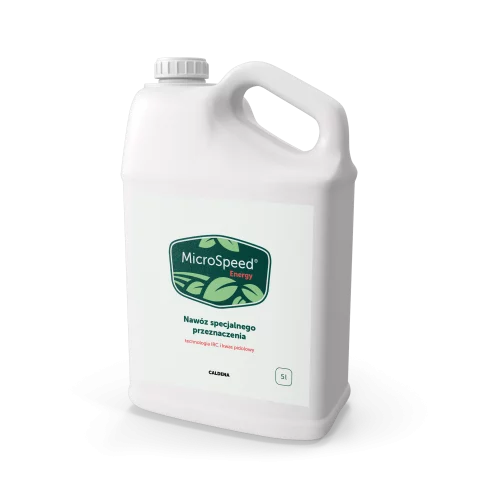

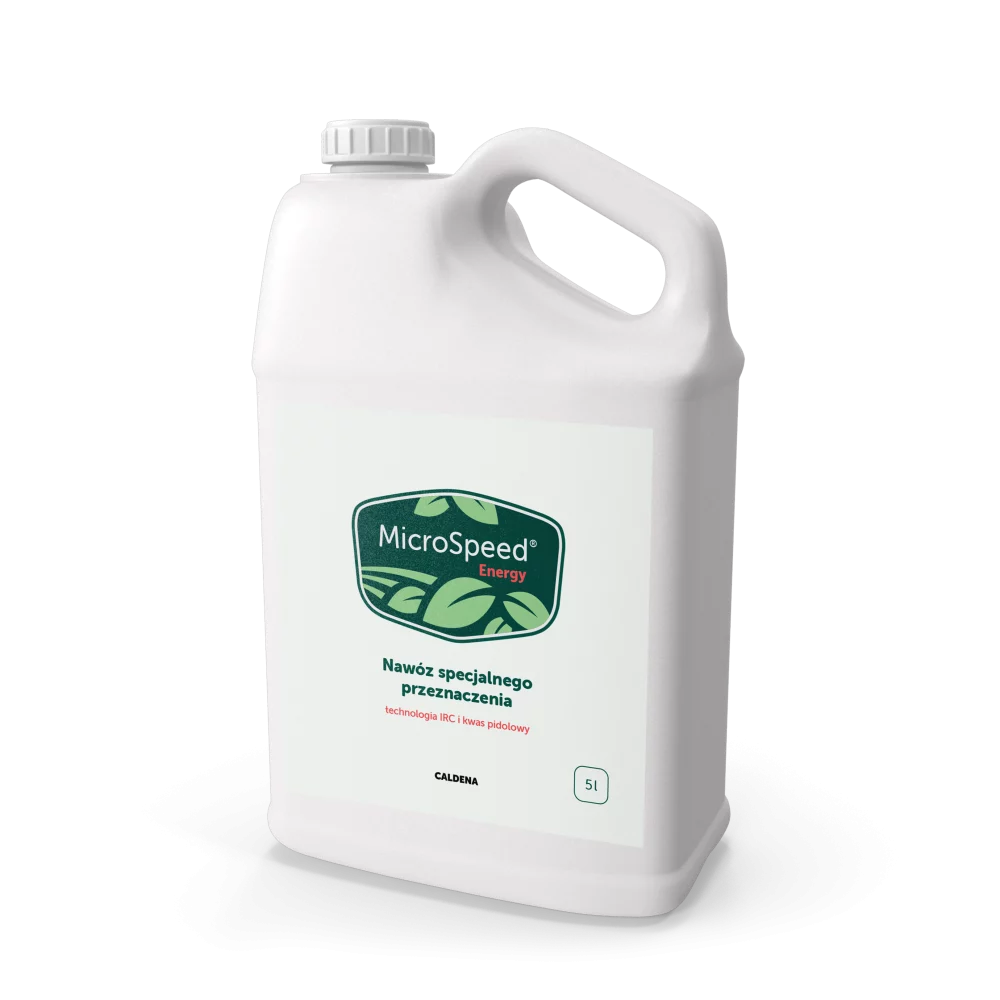

1 l, 5 l
Foliar Fertilisers with Stimulating Effects
1 l, 5 l
2 g/l IRC (1-(2-methoxyethyl)-3-(1,2,3-thiadiazol-5-yl) urea)
320 g/l pidolic acid
33.3% organic matter
35% dry matter
3.4% total nitrogen (N)
3.4% urea nitrogen (N-NH2)
0.4% phosphorus (P) soluble in mineral acids
2% potassium oxide (K2O) soluble in water
MicroSpeed® Energy is a special-purpose, fully water-soluble liquid foliar fertiliser developed to reduce the risk of yield losses caused by climate-related stress, particularly frequent drought periods and high temperatures. Such conditions induce abiotic stress, disrupt plant water balance, lead to stomatal closure, limit photosynthesis and ultimately restrict growth and yield formation.
The formulation is based on advanced IRC technology (Inhibitor of Chlorophyll Degradation), which plays a key role in protecting the photosynthetic apparatus under stress conditions. IRC limits chlorophyll degradation, helping plants maintain green leaf area and photosynthetic capacity during periods of environmental stress.
MicroSpeed® Energy also contains pidolic acid, a biologically active compound that supports nitrogen metabolism and energy processes within the plant. By enhancing metabolic activity, pidolic acid improves nitrogen use efficiency and helps reduce the accumulation of toxic ammonia in plant tissues, which may occur under stress conditions.
Through the combined action of IRC and pidolic acid, MicroSpeed® Energy supports physiological balance and recovery from abiotic stress. The formulation helps plants maintain photosynthetic activity, delay leaf senescence, and extend the active vegetation period, allowing crops to continue assimilate production under unfavourable conditions.
MicroSpeed® Energy also supports the regeneration of green tissues damaged by drought, temperature extremes or chemical stress, helping plants maintain vitality and productive potential. By sustaining metabolic efficiency and leaf function, the product supports the effective use of the plant’s genetic yield potential.
MicroSpeed® Energy is a valuable component of modern crop nutrition and stress-management programmes, particularly where maintaining leaf activity, photosynthesis and nitrogen efficiency is essential for achieving stable yields and high crop quality under increasingly variable climatic conditions.

Synergistic action of IRC and pidolic acid in plant stress response

Powered by IRC supporting key plant regulatory processes

Helps maintain leaf vitality during later growth stages

Provides effective performance at low application rates

Supports crop vitality and resilience under stress conditions
Apply preventively or as an intervention to limit chlorophyll degradation caused by abiotic stress factors such as drought, extremely high air temperatures, salinity, or natural plant ageing. Application is also recommended when reducing nitrogen fertiliser rates, in order to maintain leaf greenness, photosynthetic activity, and crop performance under stress conditions.

| Crops | Dosage [l/ha] | Amount of water [l/ha] | Number of aplications | Time of application |
|---|---|---|---|---|
| Winter cereals | 0,2–0,25 | 200–300 | 1–2 | From the tillering stage to the flag leaf stage (BBCH 23-39). |
| Spring cereals | 0,2–0,25 | 200–300 | 1–2 | From the tillering stage to the flag leaf stage (BBCH 23-39). |
| Rapeseed | 0,2–0,25 | 200–300 | 1 | Autumn: from the 2-leaf stage to the 6-leaf stage (BBCH 12-16). Spring: from the onset of stem elongation to the yellow bud stage; and at petal fall (BBCH 32-59; 65). |
| Corn | 0,2–0,25 | 200–300 | 1 | From the 3-leaf stage to the latest technically feasible application timing. |
| Potatoes | 0,2–0,25 | 200–300 | 1–2 | From the onset of lateral shoot formation to the fruit development stage (BBCH 20-70). |
| Sugar beets | 0,2–0,25 | 200–300 | 1–2 | From the 2-leaf stage to the end of the technological growth phase (BBCH 12-49). |
| Legumes | 0,2–0,25 | 200–300 | 1 | From the 3-leaf stage to the pod formation stage (BBCH 13-75). |
| Sunflower | 0,2–0,25 | 200–300 | 1 | From the 3-leaf stage to the latest technically feasible application timing. |
| Vegetables | 0,25–0,4 | 200–400 | 2 | During the period of intesive growth. Leafy vegetables: 14 days before harvest. |
| Fruit trees and shrubs | 0,5–0,7 | 500–800 | 1–3 | From leaf development to the end of fruit enlargement, or up to 14 days before harvest (BBCH 10-79). |
| Soft fruits | 0,2–0,25 | 200–300 | 1–2 | From leaf development to the fruit ripening stage (BBCH 10-81). |
| Annual herbs | 0,2–0,3 | 200–300 | 1–2 | From the 4-leaf stage to 14 days before harvest. |
| Perennial herbs | 0,25–0,4 | 200–400 | 1–3 | From the onset of spring regrowth to 10 days before harvest. |
| Grasslands | 0,2–0,25 | 200–300 | 1–3 | From the onset of spring regrowth until the end of September; 14 days after cutting or grazing |