


5 l, 20 l

200 l, 1000 l
Liquid Micronutrient Foliar Fertilisers
5 l, 20 l
200 l, 1000 l
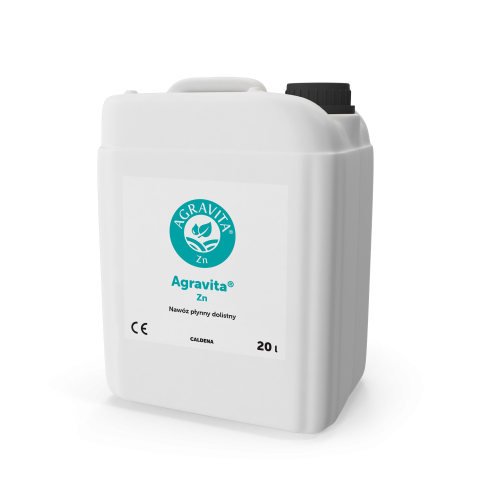
11% zinc (Zn) in the form of water-soluble sulfate (= 148 g/l)
Agravita® Zn is a fully water-soluble liquid foliar fertilizer, containing 11% zinc (Zn). It is designed to effectively supplement zinc in crops with increased nutritional demands or under conditions limiting zinc availability in the soil.
Zinc plays a crucial role in plant growth regulation, and Agravita® Zn increases the synthesis of indoleacetic acid (IAA), a key growth hormone responsible for cell elongation and development. As a result, the product intensifies root system development, improving plant establishment and nutrient uptake.
Application of Agravita® Zn enhances nitrogen uptake from the soil, supporting efficient nitrogen metabolism and balanced plant nutrition. Improved zinc supply positively affects enzymatic activity, leading to better utilisation of applied fertilizers.
Agravita® Zn also increases plant resistance to abiotic and biotic stresses, including low temperatures, drought, and pathogen pressure. By supporting physiological stability, it helps plants maintain growth and productivity under unfavourable conditions.
By prolonging the photosynthetic activity of leaves, Agravita® Zn contributes to improved assimilate production, which translates into a higher thousand-seed weight (TSW). Additionally, zinc nutrition supports increased carbohydrate, protein, and vitamin content, positively influencing crop quality and yield parameters.

Liquid formulation for precise and uniform application

Complete water solubility

High zinc concentration in sulphate form

Excellent tank-mix compatibility

Rapid uptake and fast nutritional response
Particularly effective on soils with pH > 7.0, where zinc availability is reduced, and on sandy soils as well as soils with a high organic matter content, in which zinc can be strongly bound by humus compounds. Recommended during a cool and wet spring, at high levels of phosphorus and nitrogen fertilisation, and under corn monoculture conditions, where zinc deficiency risk is increased. Application is especially beneficial when symptoms of zinc deficiency appear, supporting proper plant nutrition and growth.
| Crops | Dosage [l/ha] | Amount of water [l/ha] | Number of applications | Time of application |
|---|---|---|---|---|
| Cereals | 1–2 | 200–300 | 2 | Autumn, from 3-leaf phase Spring, from the start of vegetation to the flag leaf phase. |
| Rapeseed | 1–3 | 200–300 | 2–3 | Autumn, from 4–6 leaf phase. Spring, from the start of vegetation until the end of green bud phase. At the petal drop stage. |
| Corn | 2–4 | 200–300 | 2–3 | From 2-leaf phase to technical possibility of application. |
| Potatoes | 2–4 | 200–300 | 2 | From full emergence until the end of the flowering phase. |
| Sugar beets | 2–3 | 200–300 | 2 | From 4-leaf phase to the intensive root growth phase. |
| Legumes | 1–2 | 200–300 | 1–2 | From full emergence to the beginning of flowering. |
| Vegetables | 1–4 | 400–600 | 2–3 | During the intensive growth period, at 10–14 day intervals. |
| Fruit trees and shrubs | 2–5 | 500–1000 | 2–3 | As a preventive or intervention measure in the entire growing season. |
| Grasslands | 1–2 | 200–300 | 2–3 | From the start of spring vegetation until September, 7–10 days after cutting or grazing. |