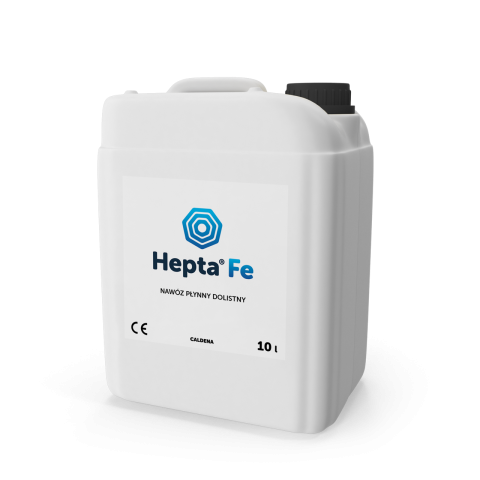

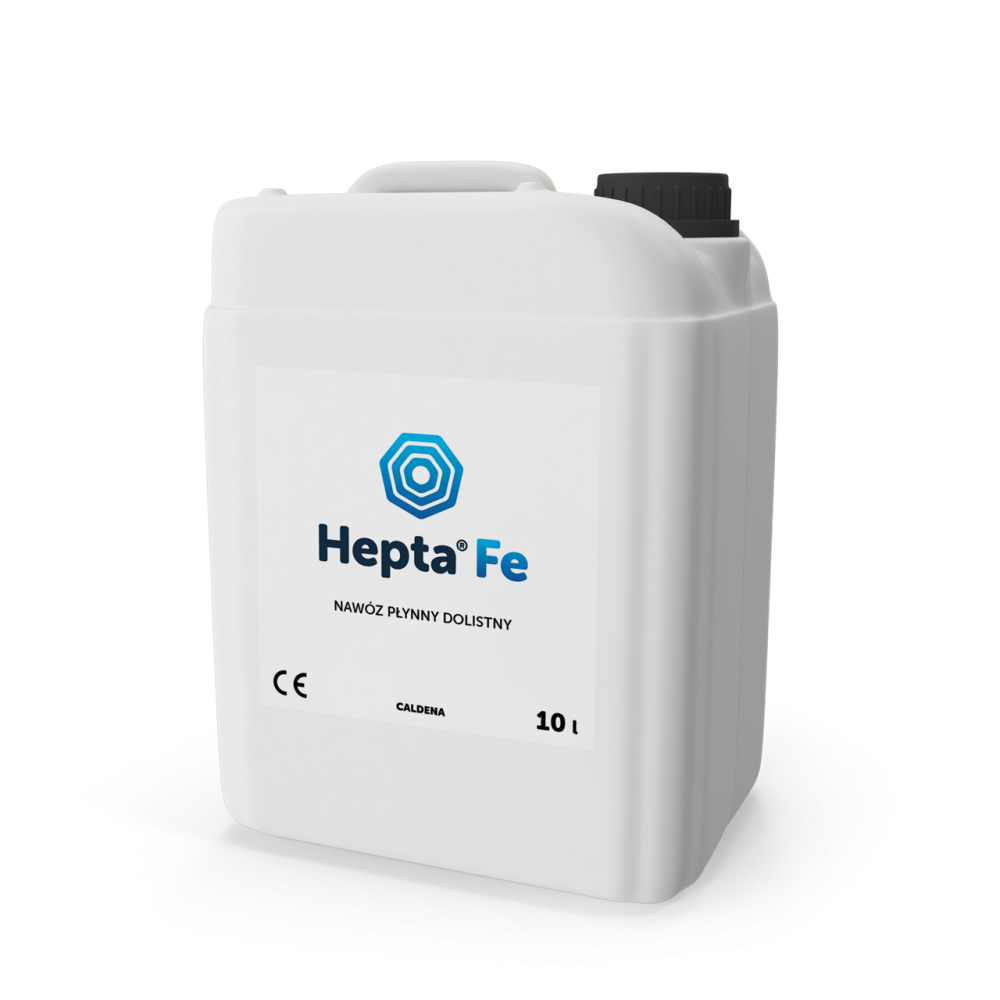

10 l
Systemic HGA Micronutrient Foliar Fertilisers
10 l
5% iron (Fe)
complexed with heptagluconic acid (HGA)
fully water-soluble
Hepta® Fe contains iron complexed with biodegradable and stable heptagluconic acid (HGA), delivering a highly bioavailable and environmentally compatible iron source. Its fully water-soluble formulation ensures uniform application via fertigation or foliar spraying, with no risk of precipitation or nutrient loss.
The product features a systemic mode of action, enabling rapid absorption through both leaves and roots and efficient translocation within the plant. This supports fast correction of iron deficiency, stimulates chlorophyll synthesis, prevents iron chlorosis, and promotes a uniform, intense green leaf colour.
Supplied in an easily assimilable, bioactive form, Hepta® Fe supports balanced plant metabolism and healthy growth. It also stimulates lignin production, enhancing plant strength and resistance to mechanical stress.
Hepta® Fe is characterised by a crop-safe, gentle formulation at an effective concentration, supporting photosynthesis, plant vigour, yield potential, and overall crop quality.

Highly bioavailable iron, complexed with biodegradable heptagluconic acid (HGA)

Ensures rapid correction of nutrient deficiencies, supporting balanced plant growth and development

Systemic mode of action enabling efficient uptake and translocation throughout the entire plant

Crop-safe, gentle formulation at an effective concentration

Fully water-soluble and easy to apply via foliar spraying
Hepta® Fe is best used when iron deficiency is likely or already visible, especially on high-pH or calcareous soils, during periods of rapid vegetative growth, or under stress conditions that limit nutrient uptake. It is particularly beneficial for vegetable crops such as tomato, cucumber, pepper, lettuce and spinach, fruit crops including apple, pear, cherry, grapevine and blueberry, as well as field crops like maize, soybean, sugar beet and rapeseed, and ornamental plants such as roses, hydrangea and petunia, where it helps quickly correct iron chlorosis, restore intense green leaf colour and support healthy, vigorous growth.
| Crops | Dosage [l/ha] | Water amount [l/ha] | Number of treatments | Application |
| All crops | 2–5 | 200–600 | 3 | After the appearance of iron deficiency symptoms. |
| Potatoes | 1–3 1–4 | 200–300 300–400 | 2 3 | From full emergence to the budding stage. From flowering to the end of berry formation. |
| Sugar beet | 1–2 1–3 | 200–300 200–300 | 1 2 | At the 4–6 leaf stage. From the 8–leaf stage to row closure. |
| Rapeseed | 1–2 1–3 | 200–300 200–300 | 1 2 | In autumn: from the 4–8 leaf stage. In spring: from the beginning of growth to the yellow bud stage. |
| Cereals | 1–3 | 200–300 | 2 | In spring: from the resumption of growth to the end of stem elongation. |
| Corn | 1–3 1–4 | 200–300 200–300 | 1 2 | From the 4–leaf stage. To the end of the technically feasible application period. |
| Legumes | 1–2 | 200–300 | 1–2 | During the intensive leaf growth and development stage. |
| Vegetables – leafy | 2–4 | 300–600 | 2–4 | From full emergence or after seedling establishment; during intensive leaf biomass growth until 14 days before harvest. |
| Vegetables – root | 2–4 | 400–600 | 2–4 | From full emergence until 14 days before harvest. |
| Vegetables – solanaceous and cucurbitaceous | 2–3 | 400–600 | 2–4 | From full emergence or after seedling establishment until 14 days before harvest. |
| Pome fruit trees | 3–7 | 500–1000 | 2–4 | From the pink bud stage to the beginning of fruit set. |
| Stone fruit trees | 3–7 | 500–1000 | 2–4 | During the leaf growth and development stage. |
| Soft fruit shrubs | 3–5 | 300–600 | 2–3 | From the budding stage to the beginning of fruit ripening. |
| Grasslands | 2–6 | 400–600 | 2–5 | From the onset of spring growth until mid-September, 7–10 days after cutting or grazing. |